


ICAA interviews
Agent of lifestyle change: Dr. Andrew Weil sows health for the whole person
Known as the ‘father of integrative medicine,’ this renowned physician discusses eating for health, aging well and transforming healthcare
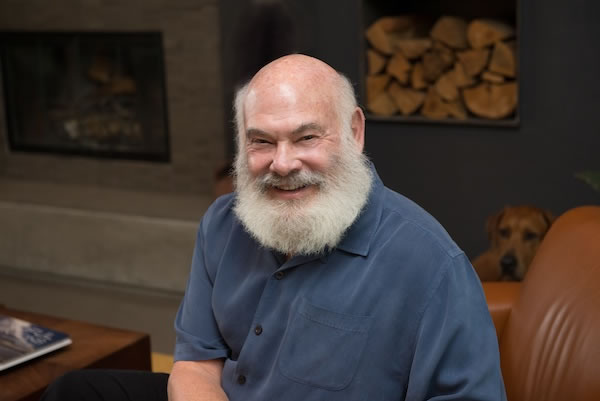
(Photo by Chris Mooney)
by Colin Milner, founder and CEO of the International Council on Active Aging®.
Did you know that 80% of Americans believe they can use healthy foods and beverages to improve their quality of life?1 Of course, they are not alone. People around the globe share a belief in the health-promoting qualities of certain foods and beverages—popular examples include green tea, kale and red grapes. This fact, among others, drives the food industry to deliver solutions with health claims ranging from improved brain health to reduced cholesterol levels.
Some foods and beverages today are touted as “smart”; others are “energy boosting.” Whether they have health conditions or diets that lack certain nutrients, individuals are likely to find a “nutraceutical,” “functional” or “super” food that promises to make a difference. Here’s the paradox: The more food is modified for reasons that include human health, the more questions arise about its safety. In fact, the American Institute for Cancer Research in Washington, DC, found in a 2015 survey2 that between 54% and 62% of respondents believed a person’s cancer risk rose due to hormones in beef, genetically modified foods, and “food additives.”
So, do these new foods and beverages help meet our nutritional requirements, or are we being sold empty promises? Even more importantly, what do we need to know in order to harness the benefits of diet for healthy aging?
To address these questions and others for the Journal on Active Aging®, I recently interviewed Andrew Weil, MD, founder and director of the Arizona Center for Integrative Medicine (AzCIM) at the University of Arizona College of Medicine–Tucson. Weil, 72, is also Lovell-Jones Endowed Chair in Integrative Rheumatology, clinical professor of medicine, and professor of public health at the university. He founded and chairs the Weil Foundation, a not-for-profit organization to support integrative medicine through training, education and research, to which he donates his after-tax profits from sales of Weil Lifestyle products. A frequent lecturer and media expert, the Harvard-educated physician has written 13 books, including the national number-one bestseller Healthy Aging: A Lifelong Guide to Your Well-Being. He has also written numerous scientific articles and papers.3
These are all impressive credentials. But what makes Weil unique is not his status as a New York Times bestselling author, or his appearances on the cover of TIME Magazine—once in 1997, when named as one of TIME’s 25 Most Influential Americans; and again in 2005, when the publication ranked him one of the 100 Most Influential People in the World.4 No, what makes Weil unique is his reputation as the Wayne Gretzky of health.
Fondly referred to as “The Great One,” Gretzky is arguably the best professional hockey player of all time. What made this athlete special was his ability to skate to where the puck would go, not where it had been. He could read the game like no one else—and it propelled him to greatness. Weil’s ability to read the game is what makes him a pioneer in the field of integrative medicine, which his website defines as “healing-oriented medicine that takes account of the whole person (body, mind and spirit), including all aspects of lifestyle.”5
This game-reading ability also makes Weil someone who challenges outdated health systems. He sees where health systems are today, focuses on where they need to be, and looks at how to get there. In 2009, the renowned leader in integrative medicine tackled the topic of healthcare in his bestselling book Why Our Health Matters: A Vision of Medicine that Can Transform Our Future .6 That same year, Weil testified before the United States Senate Committee on Health, Education, Labor and Pensions. Describing the need not just to reform healthcare, but to transform medicine, he proposed integrative medicine as “a vital part” of a new healthcare system.7
In his prepared statement, Weil explained: “For practitioners of IM, preventing disease is not an afterthought, it is the cornerstone of our practice—the physician and patient form an ongoing partnership to maintain health, rather than fight illness, and IM practitioners are trained to be agents of lifestyle change. We treat illness promptly and aggressively when appropriate,” he added, “but always seek to maximize the body’s innate capacity to stay healthy and resist disease and injury.”7
Weil also stresses the need for “a culture of health.”6 At all levels, health systems and society must shift energies and focus toward health promotion and disease prevention, which includes the necessary support for individuals to take responsibility for their health.
Unsurprisingly, Weil is a controversial figure. Many people consider the physician a health guru and visionary. Skeptics characterize him as a quack. Others call him an uncritical proponent of “alternative medicine”—a label he rejects.5 Regardless of how people view Weil, no one can deny his bold views or his real impact when it comes to a more holistic approach to health at all ages. In our interview for the Journal on Active Aging®, he was eager to share his insights and advice on topics that include healthy aging. Let’s dive in.
CM: Thanks for taking the time to talk with me today, Dr. Weil. Let’s start with a getting-to-know-you question. Beyond your biography, who is Andrew Weil?
AW: I am a doctor, but I don’t always think of myself as a doctor. I’m a teacher. I’m a writer. I’m just an active, curious guy. I was curious as a child. My parents encouraged me to follow my curiosity, so I have explored a lot of different things.
CM: Was your curiosity key to developing your approach to integrative medicine?
AW: I’ve traveled widely, and I’ve looked at lots of cultures to see how they do things. That’s how I put together my ideas for integrative medicine. I have a longstanding interest in plants, in food and in the mind—and how the mind affects the body. My range of interests is wide. [Ed. Weil’s Harvard education included a bachelor’s degree in biology (botany).3]
CM: Your book Healthy Aging was published in 2005. Where does your interest in healthy aging come from?
AW: My interest in healthy aging is very personal. As I became older—especially when I turned 60—I realized that healthy aging was of great importance to me in how I want to spend the rest of my life.
CM: How do you define healthy aging personally?
AW: To me, healthy aging means that however old I am, I feel generally good. I have enough energy to meet life’s demands; I am engaged with life; and I am not experiencing any major disabilities from the common diseases of aging. Plus, I’m not totally engulfed by negative perceptions of aging—that’s difficult to do when our culture strongly sends the message that the worth of human life diminishes with age. All the media and marketing targets a very young demographic and forgets about the rest of us.
CM: What nutritional approach do you believe promotes healthy aging?
AW: I have long advocated an anti-inflammatory diet as the overall best strategy for health and healthy aging. That’s because the diseases of aging—the big ones such as cardiovascular disease and neurodegenerative disease like Alzheimer’s—begin as inflammatory processes in the body. Cancer is linked here, too, as anything that increases inflammation also increases cell proliferation, which increases the risk of malignant transformation. Eating an anti-inflammatory diet is our best overall strategy. I’ve developed such a diet. It’s based on the Mediterranean diet, but I’ve tweaked it with Asian influences to make it even more powerful. It is not a difficult way to eat, and it allows a lot of pleasure.
CM: What specific advice do you give older adults for eating well?
AW: It’s important to eat a good diet throughout life. In North America, our eating habits are bad. We eat more processed and manufactured food than any other people in the world, and I think it is a factor in the increase in chronic diseases, especially diseases of aging. There are a lot of pressures in our society that work against people eating well. Most people I know say they don’t have time to cook or make meals at home. The whole trend toward eating manufactured food is very unhealthy, and I think a lot of older people start eating that way for convenience.
CM: Do people need to make nutritional adjustments to counter health issues such as muscle and bone loss?
AW: The need to have the right balance of fats, carbohydrates and proteins stays constant throughout life. In terms of muscle loss and bone loss, the best way to combat them is through physical activity and eating well earlier in life, because we build muscle mass and bone density until about 20–25 years of age. After that, all we can do is slow loss. So in the early part of life, people should eat well, get the right kind of physical activity, and do all the things they can to give them strong bones and muscles to last throughout life.
CM: The Dietary Guidelines for Americans, published jointly by the US Departments of Health and Human Services and Agriculture, provides guidance intended to help people eat well. What are your thoughts about the current guidelines?
AW: I think the guidelines are so-so. First of all, industry strongly influences the guidelines—for instance, the dairy industry had an extra serving of dairy added to the 2010 revision,8 even though it is not necessary. Also, there is not enough distinction in the kind of carbohydrates. They tell people to eat whole-grain foods such as whole-wheat bread, but that’s not a whole-grain food. The guidelines could be much better.
CM: I think that sometimes people are confused by the advice to eat more fruits and vegetables. After all, not all fruits and vegetables are created equal.
AW: Exactly. The government is always telling us to eat more fruits and vegetables. I think the message mainly should be eat more vegetables. Fruits are sugar sources, so we want to be careful with them. As you say, there is a distinction between temperate fruits like berries and cherries, and tropical fruits like mangoes and pineapples, which are much higher in sugar. People mostly need to eat more vegetables—vegetables of great variety across the color spectrum.
CM: People seem confused about how to eat well because recommendations continue to change. How can we make informed choices in an environment of constant flux?
AW: I could produce a solid argument against any food, so if we accept everything we hear about food, we would have nothing to eat. People say, “Well, they told us saturated fat was bad and now it’s not, and butter was bad and now it’s good. So, what does it matter? We might as well eat anything.” I don’t think that’s true. There is actually a good consensus among nutrition researchers about all the big questions. We know what makes an optimum diet, and what are good carbs and bad carbs, and good fats and bad fats—but somehow that information does not make it into the training of doctors. It is certainly not making it into the general media, which leaves most people completely confused.
For example, there was a lot of publicity about various thinking on cholesterol just recently. The research was that cholesterol in foods does not significantly influence serum [blood] cholesterol. This message got really distorted. Based on the way the media reported this news, many people will think that cholesterol isn’t important, when the research was about the influence of dietary cholesterol.9
CM: Speaking of the media, we see marketers and the media push “superfoods” as one way to influence the way we age. What do you think about these foods?
AW: A lot of this is hype. Everybody is waiting for the next “superfood” to come along, yet we have a lot of great superfoods right in our own supermarkets. Berries are a superfood. They are full of antioxidants and low on the glycemic load scale, so they don’t spike blood sugar too much. They’re great! Blueberries, for example, are as good as any of the exotic fruits that people promote. Broccoli is another superfood—it’s very strongly cancer protective. That’s true of a lot of common fruits, vegetables, and herbs and spices like ginger and turmeric, which are the most potent natural anti-inflammatory agents we know.
CM: Can you tell our readers what inflammation is?
AW: Inflammation is the cornerstone of the body’s healing response. It is the way the body gets more nourishment and more immune activity to an area that needs it. We all know inflammation on the surface of the body as local redness, heat, swelling and pain, but this response is so powerful and so potentially destructive that it is vital that it stays where it is supposed to stay and ends when it is supposed to end. When inflammation persists, it becomes productive of disease. The kind of inflammation that concerns me is imperceptible, chronic low-level inflammation throughout the body.
Inflammation has many influences. Your body has to be able to produce enough of a response to resist infection, but not so much that it causes problems. Diet is a powerful influence on the inflammatory process. The mainstream diet in North America is strongly pro-inflammatory. It gives us the wrong carbohydrates and the wrong fats, as well as too few of the protective elements found mostly in fruits, vegetables, herbs and spices.
CM: In your view, what is the essential message about diet today that everyone should know?
AW: The essential message is: Processed, manufactured and refined foods are worse for us than anything else we may eat. This is one message that will not change. People are way ahead of the game if they reduce or eliminate this kind of food in their diet. I would say the next concern is the amount of sugar people consume, and I would focus on sweetened drinks. People do not have to drink sweet liquids. By that, I mean sodas [carbonated soft drinks], as well as sweet tea, sugar in coffee, and energy drinks. We would be much better off if people would stop drinking sweet beverages or at least minimize the amount they consume.
CM: Why do you think people find it hard to cut out these foods?
AW: These foods are cheap and available. The government has made junk foods inexpensive by subsidizing commodity crops, which is one of the difficulties and great ironies of the situation. High-fructose corn syrup is in everything because it’s cheap, and it’s made cheap by subsidies to corn. Refined soybean oil—the source of the excess omega-6 fatty acids in the North American diet—is also in everything because it’s cheap and it’s subsidized. There have been no subsidies for fruits and vegetables. So fruits and vegetables are often out of reach for poorer people.
CM: How do dietary supplements fit into the overall picture?
AW: Dietary supplements are not substitutes for foods that contain them, and taking them does not excuse people from eating a good diet. I think supplements can be useful as insurance against gaps in the diet. Some supplements have specific therapeutic or protective effects when taken in higher doses than we can easily get from food. For example, in North America we don’t get enough omega-3 fatty acids, mostly found in cold-water oily fish; they are strongly protective of both mental and physical health. So it is definitely a good idea to take supplemental fish oil, even if people eat fish. Of course, fish is problematic today both from the environmental and toxic-contamination points of view, so people must take care which fish they eat.
CM: The nutritional picture today appears complicated, but the advice for healthy eating seems to focus on basics. Why do you think so many people have difficulty understanding dietary information?
AW: I don’t see the good information presented in ways that really connect with people. Part of the problem is that our health professionals—medical doctors especially—are not well-trained in nutrition, so they are not properly prepared to give this kind of information to their patients.
This needs to change. Nutrition is a big piece of the puzzle for improving health outcomes in the US. Yet it always gets short shrift.
[Ed. In a study led by Marion Vetter, MD, RD, of the New York University School of Medicine, 94% of internal medicine interns believed they were obliged to talk to patients about nutrition, but only 14% felt physicians were adequately trained to do so.10 Further, a University of North Carolina at Chapel Hill (UNC) study found that the number of hours medical schools devote to teaching nutrition has actually declined—from 22.3 hours in 2004, to 19.6 hours in 2009.11 The National Academy of Sciences recommends 25–30 hours, according to the UNC article.11]
CM: You mentioned improving health outcomes, which is among the driving forces of healthcare reform. What are your thoughts about changing the healthcare system?
AW: The prospect looks almost impossible. There are a lot of vested interests out there that oppose change. Look at the power lobbies. An even deeper problem is that as dysfunctional as the healthcare system is, it generates rivers of money—and that money goes to very few pockets. … So I don’t think change can come from the government. It can only happen if there is a grassroots movement that changes the politics of all this, and we elect representatives who are not beholden to those interests.
Yet change may still happen. Because the whole system may collapse, and then we’ll have no alternative. Costs keep going up. Doctor dissatisfaction keeps increasing. Medical outcomes are awful. We spend far more per capita on health in the US than any people in the world12—heading toward 20% of our Gross Domestic Product13—and our health outcomes are the worst among older developed countries.14 Something is wrong with that picture.
CM: Do you think the medical community has embraced integrative medicine as part of reforming the system?
AW: The medical community is in the process of embracing integrative medicine. It is being forced to change, because the economics of healthcare, especially in the US, are so dismal and getting worse. The promise of integrative medicine is that it can lower costs and improve outcomes.
CM: My last question for you relates to legacy. What do you want people to remember you for?
AW: I would like to be remembered for changing medicine. The Arizona Center for Integrative Medicine has graduated over 1,200 physicians from intensive training, and we’re training hundreds more. This is really a new model of medicine that puts the focus on health and prevention and the body’s natural healing power. That’s what I would like people to remember me for in the future.
Colin Milner is the chief executive officer of the International Council on Active Aging.
References
1. Natural Marketing Institute. (2011). NMI 2011 Consumer Trends in Healthy Aging. Available from http://www.nmisolutions.com.
2. American Institute for Cancer Research. (2015, February). The AICR 2015 Cancer Risk Awareness Survey Report. Retrieved on March 30, 2015, from http://www.aicr.org/assets/docs/pdf/education/aicr-awareness-report-2015.pdf.
3. DrWeil.com. Fact Sheet. Retrieved on March 31, 2015, from http://www.drweil.com/drw/u/PAG00070/Dr-Weil-Fact-Sheet.html.
4. DrWeil.com. Press release: Hudson Street Press Acquires Dr. Weil’s New Book. Retrieved on March 31, 2015, from http://www.drweil.com/drw/u/ART03045/Hudson-Street-Press-Acquires-Dr-Weils-2009-Book.html.
5. Lemley, B. What Is Integrative Medicine? Retrieved on March 31, 2015, from http://www.drweil.com/drw/u/ART02054/Andrew-Weil-Integrative-Medicine.html.
6. Weil, A. (2009). Why Our Health Matters: A Vision of Medicine that Can Transform Our Future. New York, NY: Hudson Street Press.
7. United States Senate Committee on Health, Education, Labor & Pensions. (2009). Integrative Medicine: A Vital Part of the New Health Care System. Testimony of Andrew Weil, MD. Prepared for Full Committee Hearing on “Integrative Care: A Pathway to a Healthier Nation,” February 26, 2009. Available for download at http://www.help.senate.gov/hearings/hearing/?id=03629575-0924-cb2e-13cb-68a8065ababb.
8. US Department of Agriculture and US Department of Health and Human Services. (2010, December). Dietary Guidelines for Americans, 2010. 7th Edition. Washington, DC: US Government Printing Office. Retrieved on March 31, 2015, from http://www.health.gov/dietaryguidelines/dga2010/DietaryGuidelines2010.pdf.
9. Templeton, D. (2015, 7 April). Scientists Debate Impact of Removing Dietary Guidelines for Cholesterol. Pittsburgh Post-Gazette. Retrieved on April 8, 2015, from http://www.post-gazette.com/news/health/2015/04/07/Scientists-debate-impact-of-removing-dietary-guidelines-for-dietary-cholesterol/stories/201504010210.
10. Vetter, M. L., Herring, S. J., Sood, M., et al. (2008). What Do Resident Physicians Know about Nutrition? An Evaluation of Attitudes, Self-Perceived Proficiency and Knowledge. Journal of the American College of Nutrition, 27(2), 287–298.
11. Adams, K. M., Kohlmeier, M., & Zeisel, S. H. (2010). Nutrition Education in US Medical Schools: Latest Update of a National Survey. Academic Medicine: Journal of the Association of American Medical Colleges, 85(9), 1537–1542.
12. Organization for Economic Cooperation and Development (OECD). Why Is Spending in the United States So High? Health at a Glance 2011: OECD Indicators. OECD Publishing. Retrieved on March 31, 2015, from http://www.oecd.org/unitedstates/49084355.pdf.
13. Sisko, A. M., Keehan, S. P., Cuckler, G. A., et al. (2014). National Health Expenditure Projections, 2013–23: Faster Growth Expected with Expanded Coverage and Improving Economy. Health Affairs, 33(10), 1841–1850; doi: 10.1377/hlthaff.2014.0560.
14. Murray, C. J. L., & Frenk, J. (2010). Ranking 37th—Measuring the Performance of the US Health Care System. New England Journal of Medicine, 362(2), 98–99. Retrieved on March 31, 2015, from http://www.nejm.org/doi/full/10.1056/NEJMp0910064.